
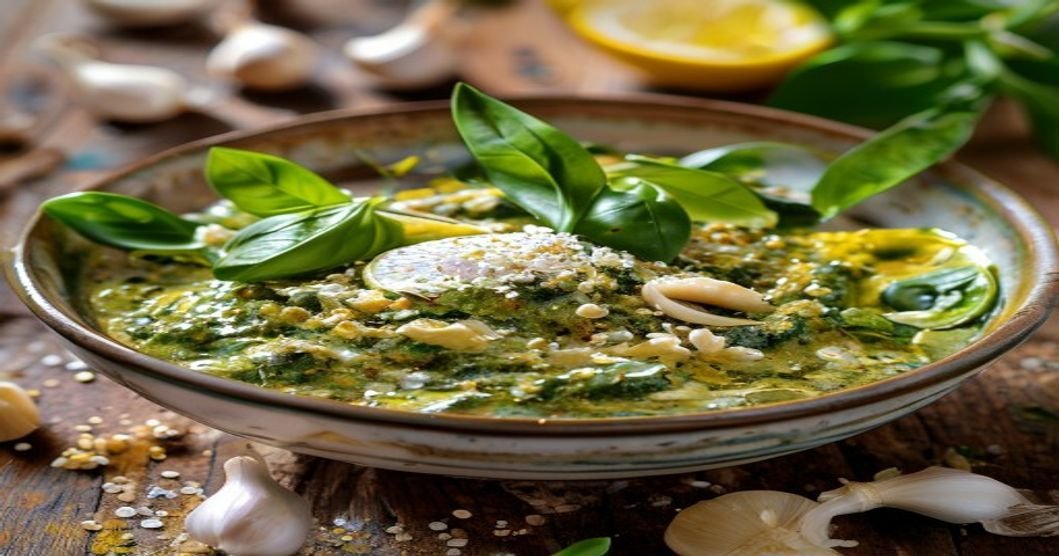
Bright green spring garlic pesto bursting with fresh basil, young garlic, and heart-healthy olive oil. This vibrant, dairy-free twist on classic pesto is perfect for pasta, toast, or veggie dips. Ready in 10 minutes with simple ingredients!

Fresh Spring Garlic Pesto: A Vibrant Twist on the Italian Classic
Spring has arrived, bringing with it the first young garlic of the season—tender, sweet, and milder than its mature counterpart.
This fresh spring garlic pesto transforms those delicate cloves into a vibrant, herb-packed sauce that’s 100% plant-based and bursting with flavor.
Made with fresh basil, heart-healthy olive oil, and a touch of nutritional yeast for cheesy depth, this easy homemade pesto is the best way to celebrate seasonal produce.
Why You’ll Love This Recipe
- Bright and aromatic: Young spring garlic adds a subtle sweetness that balances the peppery basil beautifully.
- Nutrient-dense: Packed with antioxidants, healthy fats, and plant-based protein from whole food ingredients.
- Versatile and quick: Ready in just 10 minutes and works in everything from pasta dishes to sandwich spreads.
- Dairy-free and vegan: No cheese needed—nutritional yeast provides that classic pesto umami flavor naturally.
Ingredients
For the best results, use fresh, high-quality ingredients. Organic produce will give you the most vibrant flavor.
- 2 cups fresh basil leaves, loosely packed (organic preferred)
- 4–6 cloves young spring garlic, peeled and chopped (milder than mature garlic)
- ½ cup extra-virgin olive oil, cold-pressed (rich in heart-healthy monounsaturated fats)
- ¼ cup raw pine nuts (or walnuts for a budget-friendly option)
- 2 tbsp nutritional yeast (for a cheesy flavor without dairy)
- 1 tbsp fresh lemon juice (adds brightness and vitamin C)
- ½ tsp sea salt, or to taste
- ¼ tsp freshly ground black pepper (optional)
- 1–2 tbsp water (as needed for texture)
Instructions
Step 1: Prepare the Ingredients
Begin by washing and thoroughly drying the basil leaves to remove any grit or moisture. Peel the spring garlic cloves—young garlic is much more tender and less pungent than mature garlic.
For enhanced flavor, toast the pine nuts lightly in a dry skillet over low heat for 2–3 minutes until fragrant and just beginning to turn golden.
Step 2: Blend the Pesto
- In a food processor or high-speed blender, combine the basil, spring garlic, pine nuts, nutritional yeast, lemon juice, salt, and pepper. Pulse several times until the mixture is finely chopped and well combined.
- With the processor running, slowly drizzle in the olive oil through the feed tube. Continue blending until the mixture becomes smooth and creamy, scraping down the sides as needed.
- Add water, 1 tablespoon at a time, as needed to reach your desired consistency. For a thinner pesto perfect for tossing with pasta, add up to 2 tablespoons. For a thicker spread, use less water.
Step 3: Taste and Adjust
Give your pesto a taste test. Adjust the seasoning to your preference—add more salt for depth, extra lemon juice for brightness, or nutritional yeast for a stronger umami flavor. The pesto should be vibrant green and have a balanced taste of herbs, garlic, and citrus.
Tips & Tricks
- Freshness matters: Use young spring garlic when available for the mildest, sweetest flavor. Mature garlic can be substituted but will be more pungent.
- Toast your nuts: Lightly toasting the pine nuts (or your nut of choice) enhances their natural oils and adds a subtle crunch to your pesto.
- Storage savvy: Store pesto in an airtight container in the refrigerator for up to 5 days. For longer storage, freeze in ice cube trays and transfer the cubes to a freezer bag for up to 3 months.
- Make it ahead: Prepare the pesto up to 2 days in advance. The flavors will meld and deepen over time, making it even more delicious.
Storage Instructions
Refrigerator Storage
Transfer the pesto to an airtight container, pressing plastic wrap directly onto the surface to minimize air exposure. Store in the refrigerator for up to 5 days. The pesto may darken slightly due to oxidation, but it will still taste fresh.
Freezer Storage
For longer storage, portion the pesto into ice cube trays and freeze until solid. Transfer the cubes to a freezer-safe bag or container, labeling with the date. Frozen pesto will keep for up to 3 months. Thaw overnight in the refrigerator before using.
Variations
This versatile pesto recipe can be easily adapted to suit different tastes and dietary needs. Here are three delicious variations to try:
- Sunflower Seed Pesto: Replace the pine nuts with ¼ cup raw sunflower seeds for a nut-free version that’s equally delicious and more budget-friendly.
- Spinach and Arugula Pesto: Swap half the basil for fresh spinach or arugula for a peppery twist on the classic. This adds extra nutrients and a vibrant green color.
- Avocado Pesto: Add ½ ripe avocado to the blender along with the other ingredients for a creamy, rich variation that’s naturally dairy-free and packed with healthy fats.
Serving Suggestions
This vibrant spring garlic pesto is incredibly versatile. Here are three delicious ways to enjoy it:
- Pasta Perfection: Toss with whole-grain or gluten-free pasta for a quick and satisfying meal. Add cherry tomatoes, roasted vegetables, or grilled chicken for extra protein.
- Toasted Bread: Spread generously on toasted sourdough or whole-grain bread for a simple appetizer or light lunch. Top with sliced tomatoes or avocado for added freshness.
- Veggie Dip: Serve as a dip with fresh vegetables like carrot sticks, bell pepper slices, or cucumber rounds. Pair with whole-grain crackers for a crunchy contrast.
Frequently Asked Questions
Can I make this pesto ahead of time?
Absolutely! This pesto actually tastes better after the flavors have had time to meld together. Prepare it up to 2 days in advance and store it in the refrigerator. For longer storage, freeze it in ice cube trays and thaw as needed.
Is this recipe vegan?
Yes, this recipe is entirely plant-based and contains no animal products.
Can I substitute mature garlic for young spring garlic?
Yes, but mature garlic will be more pungent. Use half the amount and adjust to taste.
What can I use instead of pine nuts?
Walnuts, almonds, cashews, or sunflower seeds work well as substitutes.